

The Syndrome of Missed Silence: Why We've Forgotten How to Be Bored and Why It's Dangerous for Our Brain
Aelarion Windrider•07/29/2026•4 分で読めます•今日更新
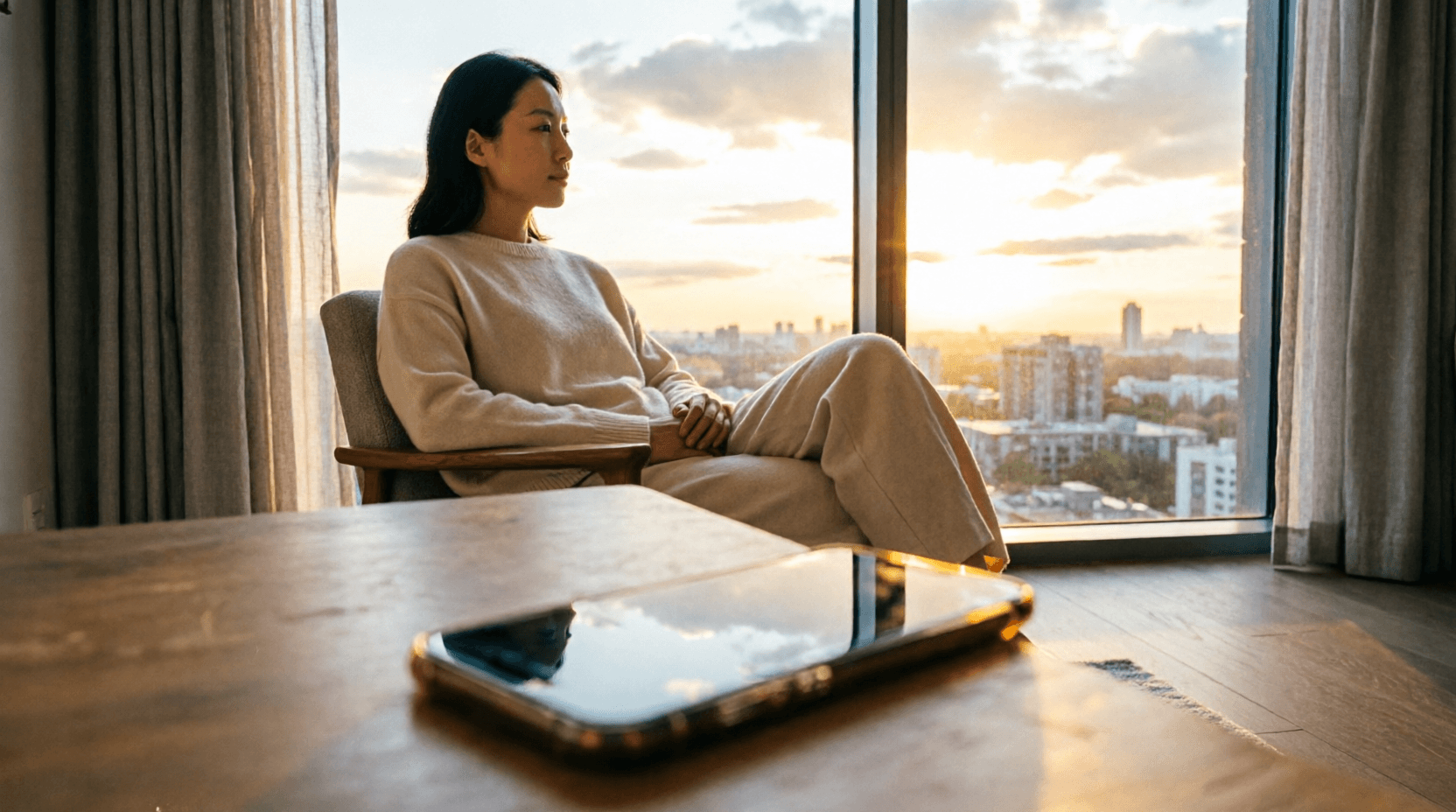
Have you noticed what happens when you're alone in an elevator? Or standing in line at the checkout? Or waiting for a colleague in an empty corridor? Almost instantly, at the level of muscle memory, your hand reaches into your pocket for your smartphone. We live in an era when "dead time"—those very minutes of waiting and pauses—is completely destroyed. But have you thought about what price our brain pays for this? It turns out that by getting rid of boredom, we accidentally turned off one of the most important mechanisms of human intelligence.
The Death of "Dead Time"
Just ten years ago, a person's day was full of micro-pauses. We looked out the window on the bus, examined the ceiling in the doctor's office, just walked down the street lost in our thoughts. Today these fragments of time are filled with endless scrolling, podcasts, and short videos.
We've stopped being alone with ourselves. And if boredom used to be considered an enemy to be defeated, modern neurobiologists are sounding the alarm: eliminating boredom is causing real damage to our cognitive flexibility.
What Happens in the Brain When You Have "Nothing to Do"
When you stop focusing on an external task (reading, working, watching videos), the brain doesn't turn off. It switches to the so-called Default Mode Network (DMN).
This state is often called "mind wandering" or daydreaming. But it's precisely in this mode that the brain does its most complex and invisible work:
Memory consolidation: It sorts the information received during the day, transferring it from short-term to long-term memory.
Future planning: The brain models different scenarios, assesses risks, and builds strategies.
Idea generation: Famous insights "in the shower" or "on a walk" are born right here. When the focus of attention is scattered, the brain begins to connect distant neural pathways, creating non-standard associations.
By filling every pause with content, we deny the brain time to "digest" information. We consume, but we don't comprehend.
The Dopamine Needle and the Death of Long Focus
Besides the loss of creativity, there's a second problem—a physiological one. Short-form content (Reels, TikTok, Shorts) trains the brain to receive micro-doses of dopamine every 15–30 seconds.
The brain is an energy optimization machine. It quickly understands: "Why should I strain myself reading a long article or watching a complex movie for 2 hours when I can get pleasure here and now, just by swiping my finger?"
As a result, tolerance for boredom drops to zero. Reading a book, deep immersion in work, or even a long conversation with a friend begin to cause physical discomfort, anxiety, and an itch in the hands. We've forgotten how to hold attention on one thing for more than 10 minutes.
How to Reclaim Your Right to Focus (Without Radical Digital Detox)
You don't need to throw away your smartphone or go to a monastery. It's not about rejecting technology, but about restoring balance. Here are several gentle but effective strategies:
Bring back "dead time." Set yourself a rule: in the elevator, in line, on the metro (if it's a short trip), and in the kitchen while the tea is brewing, you don't pick up your phone. Just stand. At first, there will be withdrawal, then a strange feeling of emptiness, and then—the return of the ability to just be.
The "one screen" rule. If you're watching a movie—put away your phone. If you're working on a laptop—close the tabs with social media. Multitasking is a myth; in reality, the brain just quickly switches between tasks, losing up to 40% of productivity and increasing cortisol levels (the stress hormone).
Add "friction." Make access to distracting apps require effort. Remove social media icons from your home screen, enable grayscale mode (this sharply reduces the visual pleasure of scrolling), or set time limits.
Practice "digital sunset." Put away your phone an hour before bed. This will not only improve sleep (due to the absence of blue light) but also give the brain that very DMN mode necessary for recovery.
Silence as the New Luxury
In a world where user attention has become the main commodity sold by tech giants, the ability to manage your attention is becoming the new superpower.
The ability to concentrate deeply, not get distracted by notifications, and allow yourself to be bored is not just a productivity skill. It's a way to preserve your identity, creativity, and mental health in the age of information noise.
Next time your hand reaches for your phone in a moment of silence, try taking a breath and just looking around. Perhaps it's in that very minute that your brain will generate the best idea of the last month.
💬 Question for reflection:
Remember the last time you just looked out the window or walked without headphones? What feelings did it evoke?
よくある質問
How can I stay updated?
Subscribe to our newsletter for the latest articles.
Is this information accurate?
We strive for accuracy and update content regularly.
Who wrote this article?
This article was created by our expert contributors.
Can I share this article?
Yes, use the share buttons to share on social media.
Can I leave comments?
Reader engagement options may be available on this page.
Where can I find more articles?
Discover more content on vronsky.com.
When was this published?
Publication and update dates are shown at the top of the article.
他にも質問がありますか?詳細については vronsky.com をご覧ください。
関連コンテンツ
テスト
もっと見る →


今後のイベント
もっと見る →
AI & Machine Learning Conference

Daniel Clark
Cutting-edge conference on artificial intelligence, machine learning, and their real-world applications.

Classical Music Concert
Daniel Clark
Evening of classical music featuring renowned symphony orchestra and guest soloists.
Health & Wellness Expo
Daniel Clark
Comprehensive expo featuring the latest in health, fitness, and wellness products and services.